The Paper Internet: Seven Days Reading Fordbridge Library's Noticeboard
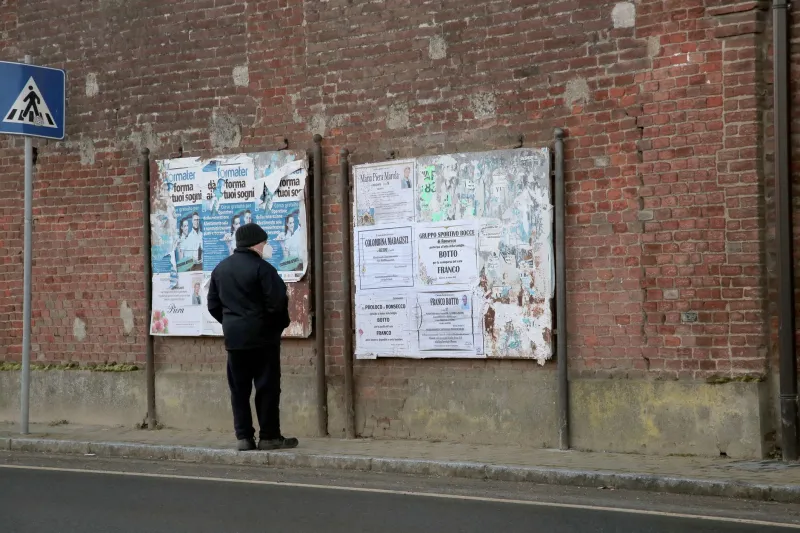
On a wet Tuesday in November, the most-read publication in Fordbridge is not a newspaper, a newsletter or a phone screen. It is a cork rectangle beside the library doors, slightly warped at one corner, covered in paper and drawing pins. No algorithm decides what you see. No comments section opens underneath. But if you want to know what the town is selling, needing, borrowing, grieving or planning, this is where the first draft appears.
I spent seven days visiting the board at different hours. Not officially. There is no rota for this sort of thing. I just stood there with a notebook while people stopped, scanned, tore off a tab or pinned something new. By Sunday evening I had a pretty good picture of how Fordbridge talks to itself when nobody is watching.
Monday: The 9.05 Edition
The library opens at nine. By five past, the board already has a fresh layer. A lost-cat notice sits top left: tabby, answers to Bramble, last seen near the rec, please check sheds. Below it, a guitar teacher's advert on familiar yellow paper, with six little tear-off strips along the bottom. To the right, a jumble sale at St Aidan's hall, Saturday, 10 till 12, cakes and a raffle. In the middle, handwritten and careful: a room in a quiet house near the rec, no pets, would suit someone who likes a calm kitchen.
None of this is urgent in the way a news alert is urgent. But it is all urgent to somebody. The cat owner wants to know before dark. The guitar teacher wants two more pupils before Christmas. The jumble sale needs enough people through the door to make the hall hire worthwhile. The flat share needs someone who will not play music at midnight. The board holds all of it without ranking one above the other.
The Unwritten Constitution
There are rules, though nobody has written them down. Date your notice. Pin the corners, not the middle, so the paper does not flap in the wind. Do not cover a live notice with your own; wait for a gap or ask at the desk. If your event has passed, take it down. If your cat comes home, take it down. If your sofa sells, take it down. The board is self-policing, but only just.
There are also zones, of a sort. Events tend to drift left. Services and lessons sit right. Lost and found lives low down, where children can see it. Sofas, beds and flat shares occupy the middle, like the classified ads of old. No committee enforces this. It has simply become the way things are done, which is often how Fordbridge works best.
The library staff keep an eye on things without curating. They supply pins if you ask nicely. They will not remove your notice because they disagree with your guitar teaching style. They will remove it if it has been there since August and the paper has gone soft at the edges. One librarian told me she recognises regular notices by their pin holes. That feels about right.
Tuesday: The Sofa and the Flat Share
On Tuesday I watched a man in a raincoat read the flat-share notice three times, then take a photo of it. He did not tear off a tab because there wasn't one. He just stood there, took out his phone, and walked off towards the bridge. Ten minutes later a woman stopped at the sofa advert, read it properly, and tore off the phone number at the bottom. Two-seater, neutral cover, one careful owner, collect from Bridge Street. No price given. You ring and ask. That is the system.
The board runs on a kind of honesty economy. Nobody is advertising a lifestyle. They are advertising a spare room, a second-hand sofa, a lift to the hospital, a choir that needs tenors. You ring the number. You turn up. You find out. In a town this size, the board is often the first place people look and the last place they need to explain themselves.
Wednesday: The Characters Behind the Pins
Every noticeboard has its regulars, and this one is no different. Mags, a retired school secretary, checks the board twice a week with a small pair of scissors and a strong sense of duty. She removes the out-of-date notices and straightens the rest. She is not official. She simply cannot walk past a curling corner without doing something about it.
Then there is the guitar teacher, who uses the same yellow paper every time and pins it in roughly the same spot. The jumble-sale ladies from St Aidan's pin in formation, three notices deep, like a small paper regiment. And there is the person who writes flat-share adverts by hand, never with a photo, always with the phrase 'quiet house' somewhere in the middle. I have never met them. I feel I would recognise their handwriting anywhere.
These are the people who keep the board alive. They are not influencers. They are neighbours with a pin and a purpose.
Thursday: What the Board Is Really For
By Thursday the board has become a small essay in local need. A card asks whether anyone could feed two cats from 14 to 18 November. Happy to reciprocate with cake. Another advertises a coffee morning for anyone who fancies a chat. A third announces a Christmas fair, a choir practice, a quiz night at the leisure centre. Somebody is looking for a lift share to the hospital. Somebody else has a stair gate going free.
It is easy to be sentimental about this sort of thing. But the board is practical. It is how Fordbridge asks for help without making a fuss. It is how a hall gets filled on a wet Tuesday, one pin at a time. It is how a sofa leaves a front room and arrives in a flat across town without a van hire or an app.
Friday: The Slow Feed
The board does not refresh. You cannot scroll it at midnight. You have to walk past it, in the rain, on the way to the library or the market or the bus stop. That is the point. It is slower than a phone and better for it. You see the same notices for days. You notice when one disappears. You wonder whether the cat came home, whether the sofa sold, whether the flat share found someone quiet enough.
On Friday afternoon, a woman in a library scarf stood reading the board for a full four minutes. She took nothing. She tore nothing off. She just read it, the way you might read a local paper in a waiting room. Then she went inside and borrowed two books. The board had done its job without selling her anything at all.
Saturday: The Cull
Saturday is when the board gets tidied. Old notices come down. New ones go up. By noon it looks thinner; by three it is crowded again. A Christmas fair has appeared next to the jumble sale. Someone has pinned a handwritten note about a missing glove. Someone else has added a small star to the corner of the guitar teacher's yellow paper, which feels like a review.
The board is never empty. That is the thing. Even on a quiet week, there is always something. A lost cat. A room to let. A hall to fill. A sofa with one careful owner. Fordbridge keeps talking to itself, pin by pin.
Sunday: What Remains
On Sunday the library is closed. The board is still there, one corner flapping in the wind. Nobody is reading it. But tomorrow morning someone will. They will stand in the cold and scan the paper for a bargain, a lesson, a way to help, a room that might suit. The board will not shout at them. It will just rustle.
If you need a sofa, a cat, a guitar lesson or a hall full of people on a wet Tuesday, start there. Bring your own pin.