Number 6 Always Knocks Twice: The Street Where Christmas Cards Still Come by Hand
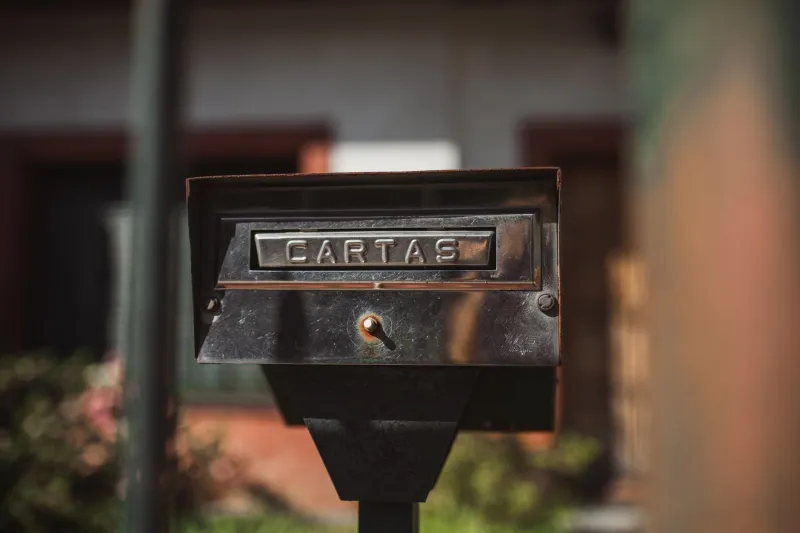
There is a particular sound that starts on Hollinbrook Terrace somewhere around the first week of December. Not carols, not a delivery van. It's the soft double-knock of a gloved hand on a painted front door, followed by the flap of a letterbox and the muffled shout of "only me!" up someone's hallway.
The cards on this street don't arrive in a sack. They arrive in a shoebox, carried under the arm of whoever volunteered this year.
The shoebox and the map
This year's volunteer is Doreen Pratt at number 6, who has lived on the terrace since 1979 and who keeps what she calls "the book" — an A5 notebook with a street map drawn in biro on the inside cover. It is not to scale. It is not tidy. It is, by all accounts, completely reliable.
"People laugh at the map," she says, tapping a rectangle drawn slightly askew. "But the map knows things the postcode doesn't. It knows that number 11 has two doors and the card goes to the side one, because the front one's painted shut. It knows the Kellys are away until the fifteenth. It knows not to bother with number 22 because they're Jehovah's Witnesses and they'd rather you didn't."
The round works like this: cards get dropped at Doreen's from the last week of November onwards, each one with a name on the envelope and no stamp. She sorts them into the shoebox by side of the street, then walks it in two passes — odds one morning, evens the next — usually with a grandchild in tow as far as the corner, and usually stopping for long enough that a forty-minute round takes most of the morning.
Why it survived the group chat
It would be easy to assume this is a custom quietly dying out. It isn't. When I ask how many cards went round last December, Doreen doesn't hesitate: sixty-one, across twenty-nine households. That's most of the terrace.
What's changed is who's in the shoebox. Five years ago it was almost entirely people who had lived there since the eighties. Now there are names she's only learned recently — a couple in the flat above the corner shop, two students in number 17 who, in Doreen's words, "write a lovely card, actually, much neater than mine."
Part of the reason it holds on is practical. Hollinbrook Terrace is a long way from the sorting office for anyone who leaves for work before seven, and the last collection from the box by the bridge is earlier than most people realise. Sliding a card under a neighbour's door is simply less faff than queueing at the post office on a Saturday.
But the more honest answer is that the walk is the point. The card is the excuse.
"You learn things on the round," says Malcolm, a retired driver at number 14 who did the job for eleven years before handing over. "You learn who's had a rotten autumn. You learn whose fence is going. You learn that the woman at 3 has hurt her hip and hasn't said a word about it to anyone. You wouldn't get that from a card through the post, would you? You'd get a nice robin and a stamp."
The wrong-door economy
Nothing about the round is entirely efficient, which is perhaps why it feels so Fordbridge. Cards go through the wrong doors with some regularity. Doreen blames the map. Malcolm blames the map too, though he drew half of it.
Last year a card addressed to Sue and family ended up at number 9 instead of number 19, where it was opened by a confused teenager, correctly identified, re-sealed with sellotape and hand-delivered the following morning with a note reading "think this is yours — sorry, we read it, it's lovely."
There is, apparently, an accepted protocol for this. You don't repost it. You don't leave it on the step hoping the wind takes it somewhere useful. You knock, you apologise, you have a brief chat about how the map is to blame, and you move on.
"It's the only postal system in Britain where a mistake improves things," says Priya, who moved into number 21 in the spring of 2024 and now describes herself, without irony, as a convert. "The first year I didn't know about the shoebox at all. Then a card came through my door in an envelope I didn't recognise and I panicked, because I thought someone had died or I was in trouble. It was just a neighbour saying welcome to the street. I've done it ever since."
How a newcomer gets on the list
You don't have to be invited, but you do have to make the first move — that's the unwritten rule. The shoebox only works if people put something in it.
In practice, joining looks like this: write a card, knock on the door of whoever's organising it that year (ask anyone on the terrace; they'll point you), and add your name to the notebook. Nobody will check whether you've lived there long enough. Nobody will ask why you've only just started.
There are three small courtesies worth knowing. Put the recipient's house number on the envelope even if you think they'll know — Doreen's handwriting is good but December is busy. Don't put anything expensive through a letterbox; cards have been known to sit on doormats in the rain. And if you're going away over Christmas, tell someone, or your card will be posted through a door that nobody opens until January.
The deadline, for the record, is 10 December. After that you're on your own with a second-class stamp and the queue at the bridge.
A street that behaves like a village
Fordbridge isn't a small town exactly, but it does a very good impression of one, and nowhere more so than on a terrace of sixty-odd houses in the second week of December. The round takes a morning. It costs the price of a box of cards. On paper it makes very little sense.
And yet on the morning I walked it with Doreen, four separate doors opened before she'd even knocked, and two of them offered her a cup of tea she politely declined and one she didn't. The shoebox came home lighter than it left. So, in a way, did she.
If you're new to the street and you've been wondering whether to bother — this is us telling you to bother. Number 6 is expecting you. Bring a card. Don't trust the map, but do use it.