Fifty-Three Crates and a Handwritten List: A Wednesday With Fordbridge's Mobile Grocer
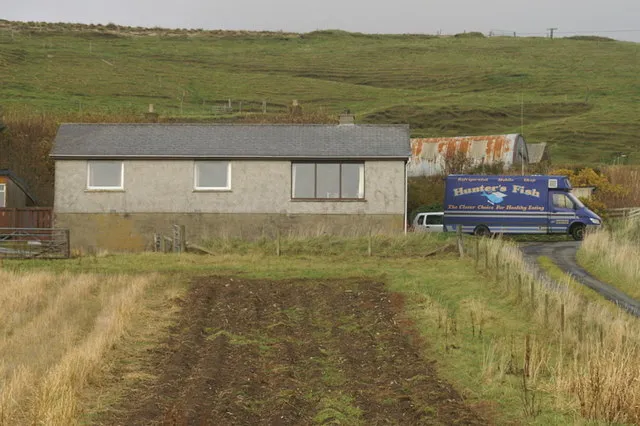
Photo: Mike Pennington, CC BY-SA 2.0, via Wikimedia Commons
The handbrake goes on at 7.42am, and Bailey Row knows what that means. A green Transit van, slightly too tall for the gap between the bollards, settles outside number fourteen. The rear doors open. Out comes a folding table, a set of scales, a cash tin, a card reader and a handwritten list taped to the inside of the door. By 7.55am there is already a queue of two.
Colin Pargeter has run this Wednesday round for nineteen years. He is 61, wears a navy fleece with a hole in the left cuff, and speaks about vegetables the way other people speak about old friends: with affection, but no fuss. The van is called, according to the faded lettering on the side, Pargeter's Fresh. Nobody in Fordbridge calls it that. They call it the green van, or Colin's van, or simply 'the grocer'.
The first stop sets the tempo
Margaret Ellis is first in line, as she usually is. She has a tartan shopping trolley and a list written on the back of an envelope. Sprouts, milk, eggs, two bananas. Colin reaches for the sprouts before she has finished saying the word.
'He's never late,' she says. 'Not once. I don't check the clock anymore. I just come out when I hear the van.'
That is not quite true, she admits. She comes out a few minutes early, in case. But the principle stands. On Bailey Row, the green van is a fixed point. It is not an app with a delivery slot that shifts by two hours. It is not a supermarket with a broken lift and a car park that charges by the half-hour. It is a man, a van and a Wednesday morning.
Colin weighs the sprouts, writes the price on a pad, takes a five-pound note and gives change from the tin. Then he asks about Margaret's sister, who has been poorly. Margaret says she is improving. Colin says he is glad. The whole exchange takes ninety seconds. It is, by some distance, the most efficient part of the morning.
A shop that knows its streets
The round has not changed much in a decade. Bailey Row first, then Mill Lane, then Orchard Close, then the little cul-de-sac off Recreation Road, finishing on the High Street just before noon. Fifty-three crates go out; most come back empty.
The stock is not fancy. Potatoes, carrots, onions, leeks, cabbages, apples, oranges, bananas, a few punnets of tomatoes, eggs, milk, bread, and a small box of treats for dogs. There is a jar of honey from a farm over towards Bidford and a tray of flapjacks made by Colin's wife, Jan. The flapjacks usually sell out before Mill Lane.
'People think I'm competing with the supermarket,' Colin says, reversing neatly into a gap that looks too small. 'I'm not. I'm competing with the walk to the supermarket. And the bus. And the weather. And the fact that a bag of potatoes weighs more than it used to.'
His customers are a mixed bunch. There are older residents who find the walk to the Co-op a bit much in November. There are parents with small children who cannot face a full shop before nursery drop-off. There are people who simply prefer to buy four carrots rather than a plastic-wrapped bundle of twelve. And there are the curious, who wander over because a van selling vegetables on a residential street feels like a small event.
The passer-by and the regular
Tom Prentice arrives with a toddler on his hip and a look of mild confusion. He has come out for nappies, he says, not leeks. He buys two bananas and a cucumber anyway.
'It's the convenience without the delivery fee,' he says. 'And Ollie likes the van. He calls it the apple shop.'
Ollie is given a small apple by Colin, which is not on the list and not on the bill. This happens several times a morning. Colin does not make a thing of it. He just hands it over and carries on.
A teenager stops, buys a single apple for 40p, and pays by card. Colin does not sigh at the card fee. He does not suggest cash. He just taps the reader and says thanks. 'I don't turn anyone away for a small coin,' he says later. 'It's not worth the awkwardness.'
The quiet economics of a Wednesday round
It would be easy to make the green van sound like a relic. It is not. It is a small business with diesel costs, insurance, wholesale prices and a fridge unit that needs servicing. Some weeks are thin. The weather matters more than you would think. A wet Wednesday in February can knock a third off takings.
Colin has thought about retirement. He has a son who works in logistics and no interest in vegetables. He has looked at the numbers and decided, for now, to keep going. 'I'm not trying to build an empire,' he says. 'I'm trying to be here next Wednesday.'
That is the whole business plan. Being here next Wednesday. It sounds modest. In practice, it is the reason Margaret Ellis does not have to ask her daughter for a lift to the shops. It is the reason Tom Prentice can buy a cucumber without paying a delivery charge. It is the reason the street has a rhythm that is not set by a supermarket timetable.
Why the street sets its clock by him
There is a word for what the green van does, and it is not 'retail'. It is 'infrastructure'. Not the grand kind, with yellow lines and consultation documents. The small kind. The kind that makes a street feel less like a set of addresses and more like a place where someone is paying attention.
Colin notices things. He notices when a regular has not been out for two weeks. He notices when a curtain stays closed. He does not pry. He mentions it to a neighbour, or he knocks a little louder, or he leaves a bag of apples on the step with a note. 'You notice, that's all,' he says. 'It's not a social service. It's just being a human being on a street.'
By 11.40am the van is nearly empty. The last stop is on the High Street, where two more customers are waiting. Colin sells the final bag of potatoes, drinks coffee from a flask, and folds the table away. The handwritten list goes back in the door pocket. The handbrake comes off.
Next Wednesday, the green van will roll into Bailey Row again. Margaret Ellis will come out a few minutes early. Tom Prentice will probably forget the nappies. And Fordbridge will carry on setting its clock by a man with a van, a list and fifty-three crates of vegetables.