The Town That Clocks Off at Seven: Fordbridge's Evening Bus Problem
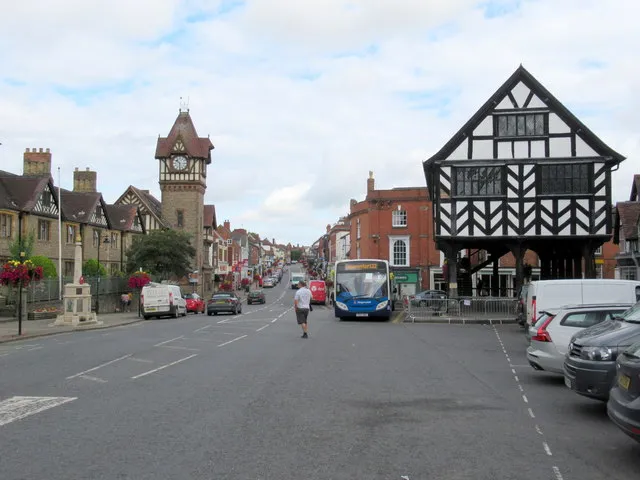
Photo: Roy Hughes , CC BY-SA 2.0, via Wikimedia Commons
It is 9.15 on a Friday night in Fordbridge. The Anchor is still busy, the Saffron Room has a table or two left and the comedy night at Fordbridge Hall is only halfway through. But the last bus to the Willows left the bus station at 18:42, and the last service towards Ashby went at 19:05.
If you live within walking distance of the town centre, that is an inconvenience. If you do not, it decides your evening for you.
This is not a new complaint. It is, though, one of the clearest examples of how a small transport decision can shape the life of a town. Fordbridge has spent the past few years trying to make its centre feel worth staying in after dark. The evening bus timetable still behaves as if the town clocks off at seven.
The 18:42 rule
The pattern is familiar to anyone who has tried to rely on the bus in the evening. During the day, Fordbridge is reasonably connected. After about half six, the network thins quickly. The 14 to the Willows and Lower Fordbridge stops early. The 7 towards Ashby is not much better. On Sundays, the last bus is earlier still.
For people who finish work at 8pm or 9pm, that leaves three options: a lift, a taxi or a long walk. None of them is impossible. All of them add cost, time or a reason to stay at home.
Leah Morrow, a healthcare assistant at Fordbridge Community Hospital, finishes some shifts at 8pm. She lives in the Willows and does not drive.
'If I miss the early bus I am looking at a taxi I cannot really afford, or asking my sister to get the kids out of the house,' she says. 'I am not asking for a limousine. I am asking for a bus at half eight.'
What the regulars say
The same story comes up in different forms across town. Dan Coates, who works in the kitchen at The Anchor, often finishes after 10pm. He walks home to Lower Fordbridge in all weathers because a taxi eats into his wages.
'It is fine in summer,' he says. 'In November it is miserable. And it means I do not go out on my nights off either, because getting home is a pain.'
Then there are the older residents who have simply stopped bothering. Trevor Hale, 71, used to go to the quiz at The Wheatsheaf on a Thursday. He gave up when the last bus moved earlier.
'I am not nervous about walking, but I am not silly either,' he says. 'I would rather stay in than walk back in the dark. That is one less quiz team, one less pint, one less night out.'
And there are the younger customers the town says it wants to attract. Maya Ellison, 28, works at the Saffron Room and finishes at 10.30pm on busy nights. She says the walk home takes 35 minutes.
'Fordbridge is a lovely town,' she says. 'But if you are on a low wage and you finish late, it does not feel like a town that wants you to stay out.'
The knock-on effect
It is easy to treat this as a bus issue. It is really a high street issue, a staffing issue and an events issue.
Pubs and restaurants lose potential customers who would happily have one more drink or one more course if they knew they could get home. Fordbridge Hall can programme a comedy night or a music gig, but it cannot programme a bus. Workers turn down shifts because the journey home is too difficult. Taxi firms do well, which is fine for them, but a town should not rely on taxis as its evening public transport.
There is also the question of fairness. A later bus is not just a convenience for people who fancy a night out. It is a lifeline for shift workers, carers, young people and anyone who does not have a car. The people who most need the bus in the evening are often the people least able to pay for a taxi.
How nearby towns manage
This is not a case of Fordbridge being uniquely badly served by geography. Neighbouring towns manage later services, at least on key routes. Calderton's last bus on a Friday is around 21:45. Marlow Green runs one until about 22:10. Ashby, which is not much larger than Fordbridge, has a 20:50 service on weekdays and a later one on Saturdays.
Those places are not perfect. Their timetables are not generous by city standards. But they send a different signal: the day does not end at teatime. Businesses in those towns can plan events knowing that some customers will be able to get home.
Operators will point to cost. Drivers, fuel, insurance and low passenger numbers after 7pm are real issues. No one is pretending that running empty buses around Fordbridge is a good use of money. But the current timetable may be creating some of the low demand it cites. If the last bus leaves before the pub quiz finishes, people stop trying to use it.
A modest pilot, not a miracle
A sensible starting point would be a 12-week pilot on Friday and Saturday nights, with a later last bus on the main routes and a modest Sunday evening service. It would not transform the town overnight. It would, however, give operators real data and give residents a reason to change their habits.
Funding could come from a partnership rather than one pocket: the parish council, local businesses and the operator. Pubs, restaurants and the hall could help promote it. If the pilot works, it becomes easier to argue for a permanent timetable. If it does not, at least the decision is based on evidence rather than assumption.
Fordbridge is good at small, practical things. It knows how to put on a market, look after a park and fill a hall for a local cause. A later bus is not glamorous. It will not make a headline outside the town. But it would let more people enjoy what Fordbridge already has — and that is a small change with a big community payoff.