Help Yourself, Leave What You Can: The Quiet Economy of Fordbridge’s Allotment Gate Table
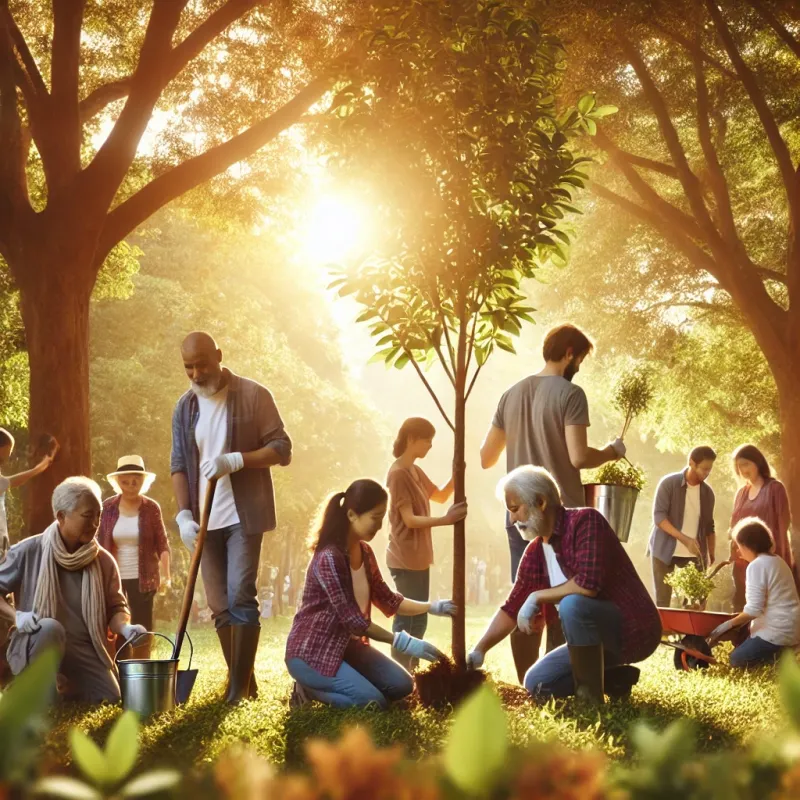
Photo: community allotment honesty table surplus vegetables donation tin autumn UK, via www.xtc.life
On a damp Saturday morning in early November 2026, one of Fordbridge’s busiest food destinations had no door, no card reader and no one behind a counter. It did have a folding table, a hand-painted sign and a bowl of courgettes that were frankly past their best.
The table sits just inside the gate of the allotment site off Willow Lane, where the path splits between the compost bays and the raspberry cages. You have probably walked past it without noticing: a plain wooden top, a clear plastic box for coins and a notebook that has gone soft at the corners from being carried in and out of the rain. Growers leave what they cannot use. Passers-by take what they need. Somewhere in between, small change changes hands and a neighbourhood keeps an eye on itself.
A stall with no till and no seller
The sign is not fancy. It says, in slightly uneven capitals: ‘Surplus produce. Help yourself. Donations welcome.’ There is no price list, no QR code and no one to ask whether the beans are stringless. According to Priya, who has plot 14 and a firm view on marrows, that is the whole point.
‘People think it is just a table,’ she says, tucking a bunch of runner beans into a paper bag. ‘Actually it is a test of whether a neighbourhood can be trusted with a courgette. So far, we pass. Mostly.’
The table has been part of the site for years, but it has never been formally staffed. Anyone can leave produce. Anyone can take it. The donation tin, an old biscuit tin held together with elastic bands, is counted once a month by a volunteer treasurer and put towards communal compost, seeds for the school plot and the water bill. Nothing is audited. Nobody seems especially worried.
Courgettes in November, and other small surprises
By late autumn, the table has usually moved on from summer gluts. In August, you might find six cougettes the size of cricket bats and a note begging people to take them. By the second week of November 2026, the offer was more modest: a bag of windfall apples, a few quinces, two jars of green tomato chutney and a handful of hardy herbs in old jam jars.
‘The courgettes are a bit of a joke now,’ says Tom, who stops by most mornings on his way to the bus stop. ‘In summer you cannot give them away. In November, someone leaves one and it feels like a small miracle. Or a threat.’
He takes an apple and puts 40p in the tin. ‘I don’t know what the going rate is. I just put in what I would pay at the market, roughly. Nobody checks. That is the nice bit.’
The table is not just for gardeners. Dog walkers stop to read the notebook. A dad with a pram once took two apples and left a packet of biscuits. A woman in a raincoat spent five minutes copying a chutney recipe into her phone. The table has become a noticeboard, a pantry and a very slow conversation, all at once.
The tin, the notebook and the honour system
The notebook is the closest thing the table has to a manager. It is an A5 spiral pad, its cover soft as cloth, filled with pencilled entries in dozens of hands.
One page from October reads: ‘Took two courgettes, left £1. Thank you — J.’ Another says: ‘Please water the parsley if you are passing. It is looking sad.’ A third, in neater handwriting, offers: ‘Whoever left the marrow: we made soup. Back next week with jam.’
Then there is the note that has been doing the rounds among plot holders. ‘To the person who always takes the smallest one — we see you. Take a bigger one. — The Tuesday crew.’
Elaine, a retired teacher who helps count the tin, says the notebook is not a record of debts. It is more like a guest book. ‘People like to say thank you,’ she says. ‘They like to explain themselves. You get little stories. Someone takes a jar of chutney and leaves a note saying it was for their dad. You never meet them, but you feel like you know them a bit.’
The money matters, but not as much as you might think. In a good month, the tin holds £30 or £40. In a quiet month, less. The association uses it for the unglamorous things: compost bags, a new tap washer, the annual seed order. It is not a business. It is a kitty.
Tiny economies, large trust
What makes the table interesting is not the produce. It is the way it turns a private allotment site into a public little economy. There is no CCTV, no lock on the tin and no rota for restocking. The rules are implied rather than written down. Take only what you will use. Leave something if you can. Do not leave meat or dairy. If you take the last of something, write it in the notebook. If you see rubbish, bin it.
‘You get the odd person who takes the mickey,’ says Priya. ‘Someone once left a bag of Brussels sprouts with a note saying “free to a good home”. Nobody took them. That felt fair.’
Mostly, though, the system works because people want it to. The table is a small test of whether a neighbourhood can look out for itself without making a fuss. It is not charity, exactly. It is more like a shared fridge with better manners.
The quiet rules nobody wrote down
By mid-November, the table is thinning out. The apples are smaller. The chutney jars are fewer. Someone has left a bundle of rosemary tied with string and a note that says: ‘For the roast potatoes. You know who you are.’
There is talk of a winter lull, when the table will hold little more than a few leeks and the occasional jar. But no one is packing it away. The tin stays out. The notebook stays under the plastic box. The sign stays up, even when there is nothing on the table but a lonely squash and a handwritten reminder to close the gate.
Tom reckons that is the point. ‘It is not really about vegetables,’ he says. ‘It is about knowing that if you leave something out, someone will either take it or leave it alone. That is a decent way to live.’
On the damp Saturday morning in November, a woman in a red coat stops at the table, reads the sign and takes a single apple. She puts 20p in the tin, writes nothing in the notebook and walks on towards the recreation ground. Behind her, the table stays exactly where it is: unattended, unguarded and quietly working.